Lula's win keeps Brazil's minerals on its own terms
Its new minerals screening law stays, facing a right-leaning Congress and US tariffs.
Brazil's electoral court gave President Luiz Inácio Lula da Silva 51.8% of valid votes in the Oct 25 runoff against Senator Flávio Bolsonaro, a lead of about 4.4 million votes. Bolsonaro had led the Oct 4 first round 47.03% to 45.16%. Lula's new term starts Jan 5, 2027.
For miners, the result locks in the critical minerals law Lula signed six weeks before the vote. The open question is how his government writes the rules under it.
“With Lula, the U.S. is on shakier ground”
Markets priced the other outcome
The Ibovespa fell 13.88% on Oct 26 to 176,608 after a 30-minute circuit-breaker halt, and the dollar rose 8.79% against the real. The index had jumped 7.7% to a record after Bolsonaro led the first round. The sell-off reflects fiscal worries, not mining policy; a weaker real helps dollar-earning exporters such as iron ore producers.
The law that already passed
Law No. 15,506, enacted Sept 16, created a critical minerals council, CIMCE, attached to the presidency. It can approve, condition or block changes of control at holders of critical-mineral rights and international supply deals that could affect Brazil's economic or geopolitical security. The law caps exploration licences in critical-mineral areas at 10 years and offers tax credits of up to 20% for domestic processing, capped at R$1 billion a year over 2030-2034.
The list of covered minerals and the screening rules are still unpublished. CIMCE must be set up within 90 days of the law, so by mid-December. Mattos Filho partner Adriano Drummond Trindade told MINING.COM investors can live with screening if it is predictable, consistent and timely.
Serra Verde slipped in first
USA Rare Earth, in which the US government holds a 10% stake, closed its US$2.8 billion takeover of Serra Verde, Brazil's only commercial rare earth producer, in early September. Lula signed the screening law two weeks later. Monica de Bolle of the Peterson Institute told the AP that revisiting the deal is on Lula's radar, though not likely a first move.
Foreign-owned companies filed 42% of Brazil's 2,727 rare earth exploration applications through June, led by Australian, US and Canadian investors. More than 86% were filed in the past three years.
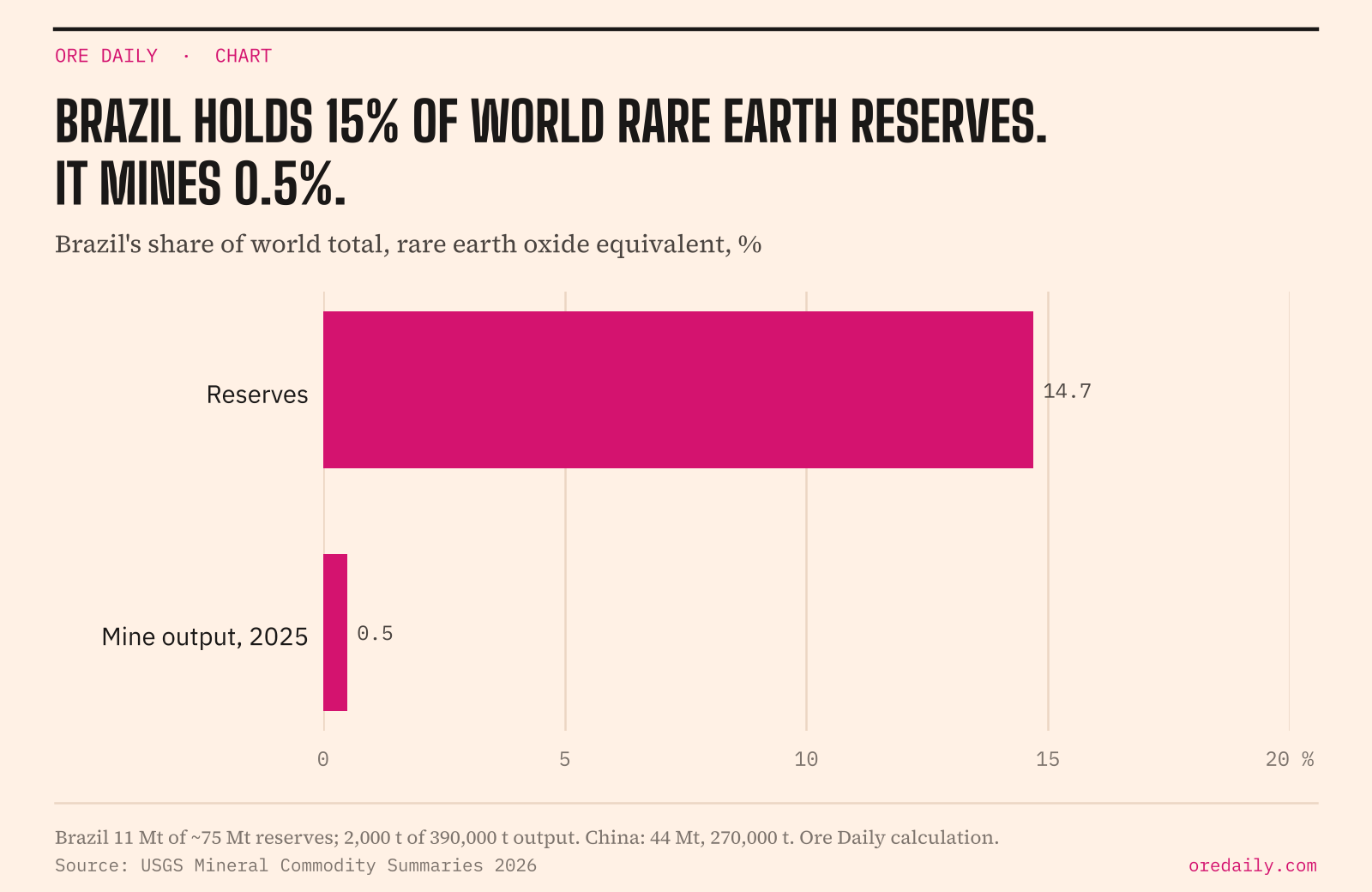
USGS cut its estimate of Brazil's rare earth reserves to 11 Mt in its 2026 summary, from 21 Mt. Brazil still ranks second to China's 44 Mt; several outlets still cite the older figure.
Tariffs, niobium and a 'rigged' claim
Trump said Oct 26 the vote looked like another rigged election, without evidence. Bolsonaro's Liberal Party later acknowledged the result. A 25% Section 301 tariff on most Brazilian goods has applied since July 22; it excludes goods under Section 232 duties, including steel, aluminum and copper. A separate forced-labor probe could add 12.5%.
Washington's final tariff order exempted niobium ores and ferroniobium. Brazil supplies about 90% of world niobium, according to the USGS.
Congress moved the other way
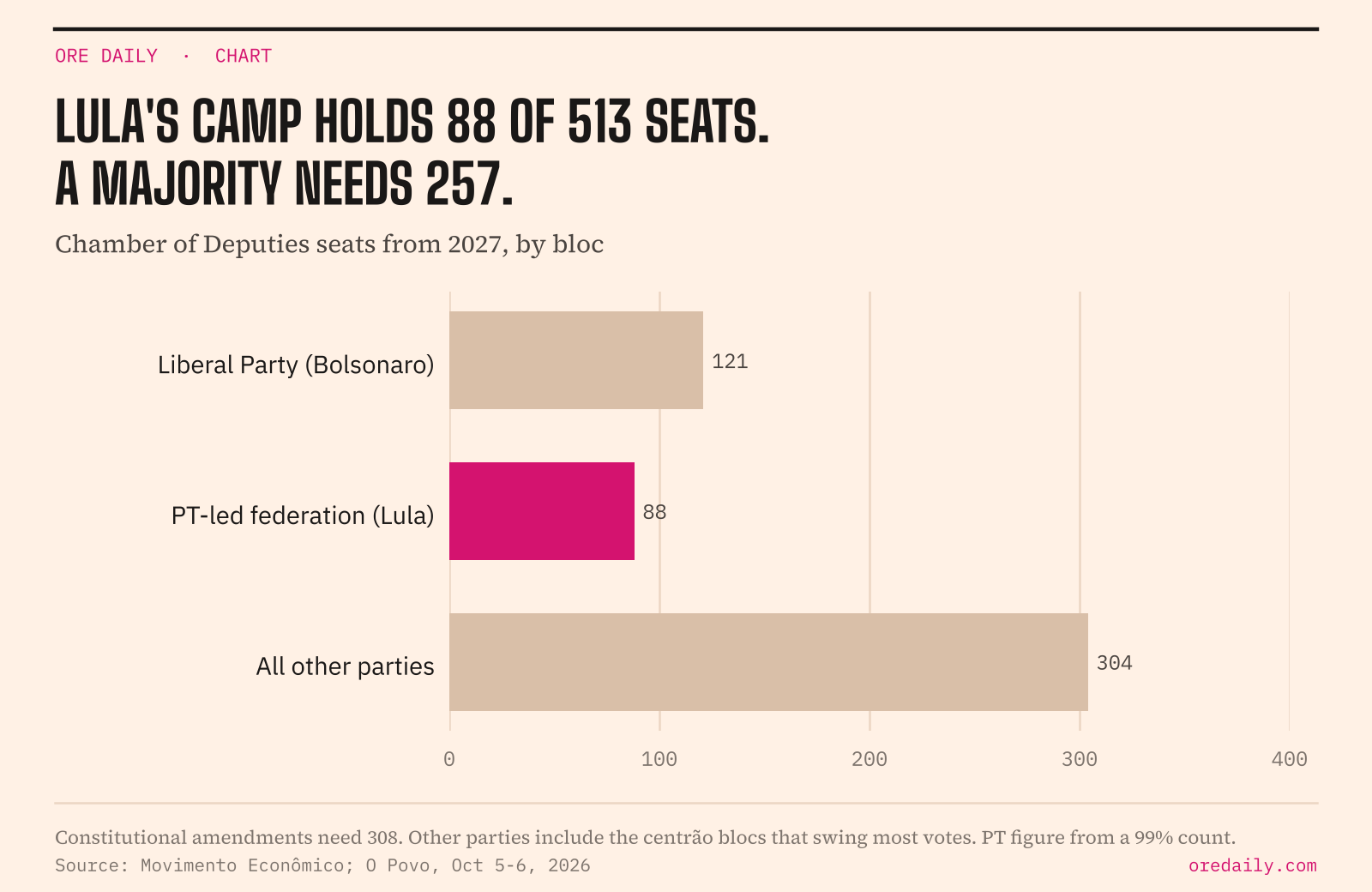
The Liberal Party won 121 of 513 lower-house seats in the Oct 4 vote and will hold 28 of 81 Senate seats. The PT-led federation won 88. Going beyond Law 15,506, for example with higher royalties or local-content rules, would need new legislation.
What to watch
CIMCE's set-up and first critical minerals list, due by mid-December; its screening criteria and deadlines; any review touching Serra Verde; US-Brazil tariff talks and the niobium exemption; and Lula's finance minister pick.
Brazil mined 2,000 t of rare earths in 2025. China mined 270,000 t.
Sources MINING.COM · AP via PBS · Reuters via US News · Machado Meyer (Law 15,506) · Mattos Filho FAQ · Greenberg Traurig (Section 301) · Rio Times (markets) · USGS MCS 2026 via INN · Movimento Econômico